Talking About Health; Why Health Communication Matters

Welcome to my Why Health Communication Matters BLOG

-Roxanne

Does your family have copies of or know where to find your advance directive?

161_10623August 28,2010

Even though I did not live near my grandmother and didn’t get to see her very often, she greatly influenced me. Even in death, she became a role model. She had copies of her advance directive in places where her family and others could not miss them. She had one on her refrigerator door, held there by those little plastic fruit magnets. And she had talked to her daughters about her wishes. She did not want extreme means to be applied to try to save her life. She wanted to have the quality life that she had lived. She remained independent until her death, which was well into her 80s. She lived in her own home. She lived on property that she walked everyday of her life except when she was recovering from hip surgery or the snow was too high to navigate with snow shoes. She read even though it meant using magnifying lenses and a magnifying light. She did handwork…even though it meant using magnifying lenses and a magnifying light. She drove her own car…to have a meal in town with her family each week, to church on Sundays, to  a general store to buy yarn or fabric to continue or start another project…. She made the best chocolate bundt cake ever…from scratch. She could turn the toughest piece of meat into the most tender, pounding it with a kitchen hammer designed for that task, and cooking it in the oven on a low temperature for a long time…  She would say, ‘have an advance directive… ‘

So for the next couple of weeks, I will pursue conversations with family about having an advance directive. I will let you know how it goes. Perhaps you might do the same…

How does Bret Michaels manage life-on-the-road and Type I diabetes?

August 9, 2010

I attended Bret Michaels concert at the Clearfield, PA county fair on Friday night. resized_bret_michaels_1_3059It was a celebration of life.  He thanked fans for their prayers and support for him during the past year. He literally seemed to breathe in the positive energy and well wishes of the fans at the concert. Which communicated something about health….  http://gantdaily.com/2010/08/07/bret-michaels-rocks-at-the-clearfield-county-fair/ 

As covered in the news and entertainment media, Bret had some life-threatening health events this year. He appeared on the show, ‘Celebrity Apprentice’ and, in fact, won… but during the season, he revealed his nearly lifelong efforts to manage diabetes. And he talked about the emotions he felt while waiting for news about whether his daughter had the disease.

I don’t know Bret or his daughter. But I do know that one of the reasons we don’t talk about health in our families is that we feel a sense of blame for the ‘bad’ things that got passed on to us through our genetic pool and a sense of responsibility about passing them along to our own biological children.

Try this: for every so called bad thing, make a list of the good things that were passed on to us and that we may pass on to others. When having those family health history conversations, balance the good with the not so good news.

It might be, for example, that Bret’s positive and affirming way of looking at life has a genetic component and that he will or has already passed on such resilience to his children. I suspect that at the very least, that attitude goes a long way toward helping him to manage life with a chronic condition like diabetes…

Do you know what condition is linked to a bull’s eye rash?

img_0026July 14, 2010

Someone recently told me, “I read your blog when I get a chance and it is interesting… but what am I supposed to do with the information there?” I paused for a moment. And after a bit of conversation, I decided to take the blog in a different direction for awhile. While I hope information will still be interesting, I thought we could try a bit of an experiment to see if we can make the information more directly useful. So, here goes.

What is one health risk you face because of something you like to do for fun? For example, if you like to go hiking in the woods, you face risks relating to poison ivy and/or ticks. I like to hike and often face these risks. I am very sensitive to poison ivy. So I know what poison ivy looks like… well, sort of. Leaves of three. That is a description that fits a lot of plants in the woods, so it is a bit challenging to avoid all plants with leaves of three. And in fact, I am not always successful in doing so.

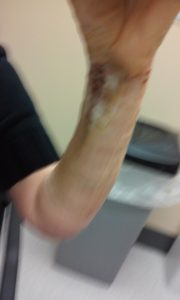
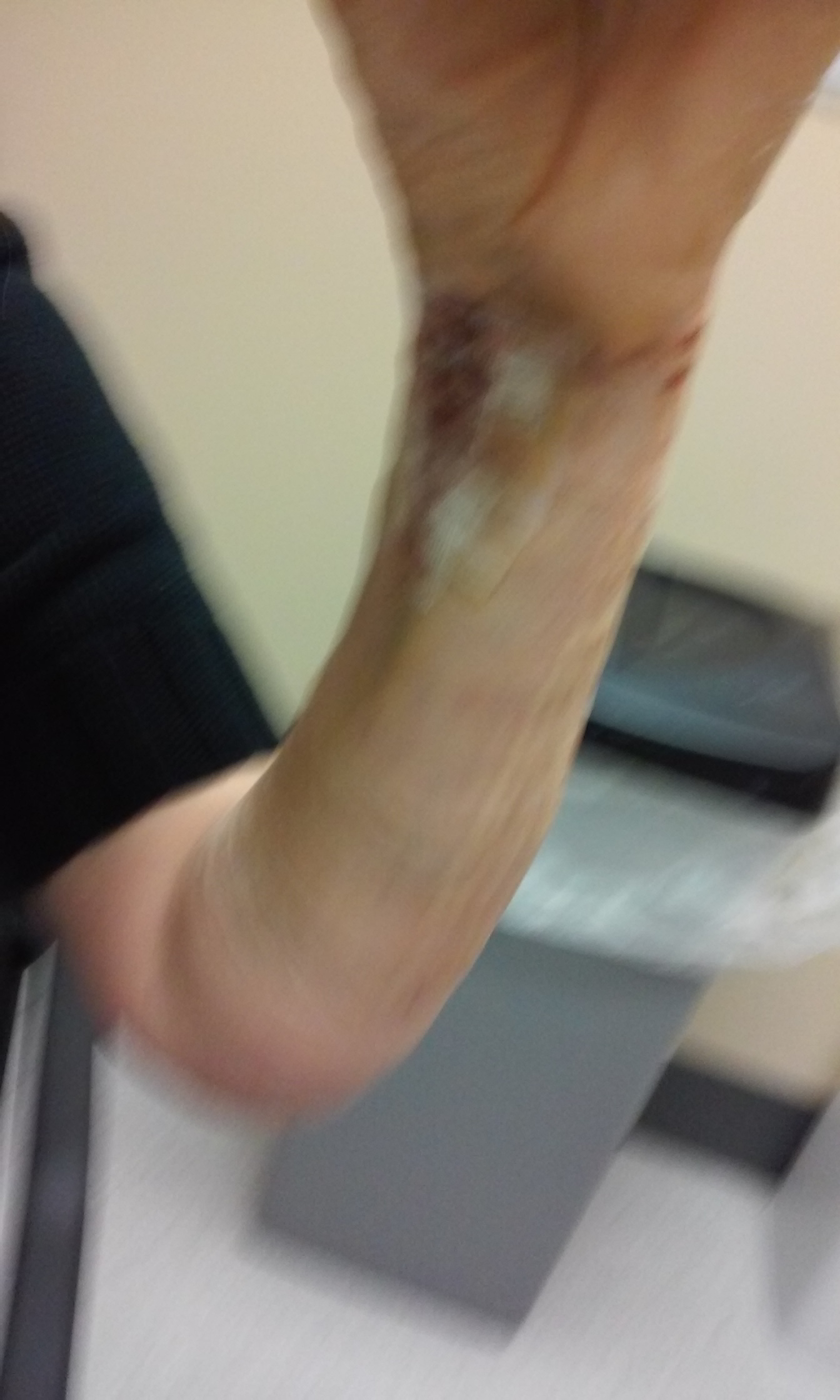
As for the result of not successfully identifying and avoiding poison ivy, I am all too familiar with the blistering rash that comes with exposure to the plant. Recently, after a weekend in the woods, I developed chills and aches–severe ones that seemed like a summer flu. As I buried myself under quilts for a second evening, I noticed a rash with a familiar red appearance forming on me. I was pretty unhappy about what I expected to be coming. The morning after noticing the rash, I looked for the blisters I was expecting as part of what I assumed was going to be poision ivy rash. Instead, I found that the rash was now about 12 inches in diameter and rather circular with an area of red surrounded by a white circle and then more red in a rather prominent circle.

This is when online health information searching comes into play for me. I went online and searched for ’causes of red rash.’ It wasn’t long before I came upon a picture of my rash–and the label, a bull’s eye rash, and the link to Lyme’s disease. Alas, in a short time, I was in the doctor’s office getting antibiotics and grateful for the online health information that advised me to ‘call my doctor.’ The effects of Lyme’s disease added to my haste to follow the advice.

I realized through this experience that one of the most important things for us to do when communicating about health is to find out what signs or symptoms go along with a condition. So, my challenge to you is to identify a condition that you feel at risk for and then identify through an internet information search the symptom or sign that goes along with diagnosing the condition. Be specific. For example, chills and muscle aches go along with Lyme’s disease but they fit a lot of things. The bull’s eye rash…that is a very specific clue to the condition.  

Share what you learn here…

Why “knowing” is not enough to support doing?

img_0445June 20, 2010

How many of us don’t know that overexposure to the sun causes skin cancer? Or that eating too much and exercising too little causes weight gain? Or working too much and having too little fun contributes to depression? Or getting too little sleep and worrying about things we have little to no control over leads to exhaustion and stress? 

Too often, health messages are about the “knowing,” when–quite often–we already know facts about health. What we don’t know is “how” to do the things the facts suggest we should do. As I discussed in the last post, when we talk about health, we often talk about our family, our work, and the things we do to have fun. So what we want to talk about and what we hope others will share with us is the “how to” meet our employer’s expectations and not work too much, sleep too little, and worry about meeting our obligations. How to have fun in the sun and not get skin cancer. How to adapt our family life to the recommendations that our doctor makes at an annual check-up.

I have adopted the practice of asking my doctor the “how to” question. For example, my OB-GYN noted a two pound weight gain at my annual check-up and cautioned that if I gained two pounds every year, that would be quite bad for my health. I said that I had changed my diet and exercise to decrease my cholesterol levels and that I had noticed a bit of weight gain. I inncreased how many nuts I eat, including almonds and walnuts, while decreasing animal proteins that I eat. It seemed to help with levels of bad cholesterol…which had decreased…but also added calories to my diet.

“It is just all about being active enough to use the calories you consume,” she said. ”How you do that is up to you.”  

Fair enough. But to support doing that, I need to know “how to” do it…one reason an entire industry of diet foods delievered to our homes exists and one reason that so many online sites offer the experiences and stories of so many of us talking about…”how to” do what we already “know” we should do…

Why don’t we talk about ‘health’ when communicating about our health?

img_0109June 11, 2010

A lot of attention is given to patient stories. Most online health sites have a link to patient stories. Why? Often because the stories make content more ‘real’ than numbers and statistics alone do.

When we tell our stories, we can describe how we feel, what matters in our life, things about family, what kinds of things we do for fun, and how we earn a living. Implicitly, we talk about these things because we value our good health, and being healthy comprises one important goal. But being healthy often needs to be adapted to our family, recreational, and occupational lives. And so, we talk about these topics, implicitly hoping for conversation about how to adapt to possible health risks while sustaining these other areas of our lives…

Who owns our genetic information?

119_1944aMay 29, 2010

There has been some discussuion in the media about some pharmacies considering and reconsidering whether to offer genetic testing for purchasing. Why would we want to know about our genetic make-up when it comes to health? Why would anyone care if we paid money to purchase genetic testing without our doctor recommending it? How should we be talking about this issue?

Knowing information about our genetic might be one more way to promote our health. As we discuss across the entire book, Talking about health, this era of personalized medicine makes it possible to predict our risk for some conditions. However, as we have discussed in this blog before, knowing that we have genetic contributors to heart disease or that we do NOT have these contributors does not determine that we will or will not get heart disease.

So one reason that there may be concern about giving us access to genetic information through personal purchasing power is that having the test may give some of us a false sense of security and  some of us a false sense of ‘doom’ about risk for disease. We may not use the information in ways intended. We may lose sight of the information being just one indicator of possible risk. Remembering that the era of personalized medicine is NOT about single genes predicting absolutely that one will get a disease is a critical part of realizing any benefit from knowing genetic information about our health.

Another often discussed issue is ‘who owns our genetic information?’ While this has been frequently discussed based on concerns about health insurance, we hear less discussion in the media about disclosure to family members. Once we know our genetic information, who should we share the information with in our families? After all, any information we have has some relationship to the biological make-up of other members of our biologically related kin. Should there be any responsibility for telling others about what we learn? Who decides?  

We also hear no conversations about the fact that tests can be ‘wrong.’ How should results be treated? If we are found to have genetic predictors of increased risk for heart disease, for example, should we be tested again to be sure the results were accurate? Tested with the same test we purchased? If we did not have positive test results, should be be tested again to be sure that we don’t have the genes? What are the levels of accuracy associated with these tests? How much faith can we place in the results? Does our own human error enter into the equation?

So, yes, we need to be talking about these issues alongside our conversations about making genetic testing available to use in our local drug stores…..

How might communication–including access to the internet–relate to health disparities?

butterfly-pictureMay 19, 2010

Health disparities…differences in the health status of some of us compared to others–have many links to communication. We could place more emphasis on efforts to address some of these as part of health care reform.

One communication contributor to health disparities is a lack of equal access to health information. In particular, a digital divide has been identified as leading to differences in people’s awareness and understanding of ways to promote health and treatments for various diseases.

The digital divide has been discussed for years in terms of the affordability and availability of computers. This contributed to programs to increase access to computers in public schools and public libraries. Access to sources of health information is an important goal–one that may be enhanced by improving the nation’s infrastructure.  I was struck by a colleague’s recent revelation on our way to a meeting in a rural community in Pennsylvania. He said that he seldom uses the internet from home. In his location, internet access still depends on the use of a dial-up modem. The slow and painful effort to get online just isn’t worth it. Libraries and schools in his area suffer from the same challenges.  

The effort to reduce the digital divide by increasing access to online health resources is a good start but reminds me of the ‘just build it and they will come’ fallacy. Once we get on the computer, and we use our favorite search engines to look for health information, how do we decide whether the information is useful and relates to us? How do we understand the information? How do we harness resources to apply the information when we do understand it? That includes having sites for care and providers for care. …that includes having the ability to pay for care, time off to receive care, and transportation to sites for care.

Health disparities becomes a communication issue with many facets and many audiences to consider. If we approach health disparities as only an issue relating to access to information, we risk placing blame for continuing and/or growing disparities on people experiencing the disparities.

In a world where access to health information was supported by access to services, products, and care–our individual perceptions still may lead to disparities. Understanding related to the information and choices to apply the content depends on some knowledge of health terms and ability to translate the metaphors so often used to commmunicate in health information. Understanding also depends on the cultural and social lens through which we view the information. And on our own goals–including where we place responsibility for health.

Some of us assume more personal responsibility for our health than others. Some of us believe more in the role of family history and genetics than others. Some of us believe that the environment plays a greater role in our health than our own behavior. And some of us believe in a role for spirituality and religious faith. When we combine these into our health perspective, sometimes health disparities emerge…  Can erasing a digital divide make a difference in these issues? Perhaps if we communicate about them directly, online and in other settings where we talk about health.

How will health care reform change how our country communicates about health?

118_1806May 12, 2010

Watching my 5 year old granddaughter play youth soccer was great fun. Such energy. Such excitement. Such effort. Everyone running toward the ball and doing their best to get in a good kick. Sometimes in their enthusiasm, they lost sight of which goal they should be aiming for and may even accidentally kick the ball into the other team’s space. It’s a bit like health care reform in the U.S.

Keep ‘health’ in health communication… this is one of my mantras. I remind myself of it when thinking about the value of my own health communication research and the value of work that I review. It reminds me to consider, “how will the work make a difference in the health of someone?” Will it, for example,  help someone to make a decision about which treatment to choose, which food to eat, how important rest and fun can be for health? Will it help someone to talk with family members about health history or to disclose to family members, doctors, or others important information about health status? Will it enable others to provide emotional or tangible social support to keep to a health regimen? …and so on.

So when I listen to conversation about health care reform, I am struck by several trends. First, there is so much fear and anger in the discourse. My mom, for example, will be having hip replacement surgery this summer. She is in her late 70s and on Medicare. She is convinced that her doctor will be paid very little for her surgery because of health care reform. She is also fearful that if she doesn’t act now, she may not be able to even find a doctor who will do the surgery soon…because the doctors won’t be paid well and won’t accept patients on Medicare.

We know quite a bit about fear appeals in communication. And sure enough, what I hear suggests to me that for many, the talk about health care reform and the actual reform itself does not make the efficacy of the actions clear. How will this reform be an effective response in both promoting ‘health’ of citizens and in limiting the runaway expenses? How might each one of us feel more confident or gain the ability to make decisions about our own health based on the reform? Made to feel fearful, many become angry and direct it toward the source.

Second, there has been too little direct translation of how health care reform will benefit health. Health illiteracy and science illiteracy often provide a way to explain our lack of understanding about health issues.  Health insurance illiteracy is a whole new ball game. Most of us have some experience with car insurance or home owner insurance or life insurance, so we fall back on those as a way to understand health care insurance and health care reform. We need some help here. We need to know what ideas from other insurance contexts apply and what ideas don’t apply.

In some cases, if you get ticketed for speeding or running a red light, it shows up as higher premiums on your car insurance for awhile. Generally, we think that buying life insurance when we are younger rather than older will be less expensive. And if we fail to prune the tall tree near our home and it falls onto our roof, causing us to file a claim–some increase in our premium isn’t too surprising. So how do these ideas relate to health care reform? And if they don’t, why not?    

Third, the optimistic outcome relating to health care reform and changes for how our country communicates about health is that we all become wiser about how politics relates to health… So we participate in the political process with our vote in elections and our voice in debate… not just in overcrowded town hall meetings but in the online forums available to us through access to our representatives where we ask questions and persist until we have answers…  often and not just when something ‘big’ seems to be in the wind.

In short, we need to keep our eye on the ball and the goal, and make sure that those who represent us do the same…

What does the “food pyramid” tell us about health communication and ‘old science’, ‘new science’, ‘conflicting science’, and no science’?

143_07811May 3, 2010

I cannot recall the first time I heard about the ‘food pyramid’ but it was decades ago.  The United States Department of Agriculture [USDA] online site at http://www.mypyramid.gov/ provides an overview of the research in this area. Right under the image of the pyramid on the homepage, the follow sentence is bolded: “One size doesn’t fit all.” Over to the left of the pyramid, the heading, ‘Specific Audiences,’ includes ‘Preschoolers’, ‘Kids’, ‘Pregnant & Breastfeeding’, and ‘General Population’–giving us a sense of groups whose needs vary. Skimming through some of the information, it doesn’t take long to affirm one of the points that I make in my book, Talking about health

When communicating about health, sometimes there is no science to guide prevention guidelines, diagnosis, or treatment. A quick review of the history of the food pyramid shows that even before vitamins and minerals had been discovered, the USDA provided dietary guidelines–the first time appearing in 1894. The first food pyramid was published in the 1960s. The goal is to help us know how to talk about food and nutrition without having to be an expert. So food is divided into groups and we gain a sense of how much of each group adds up to a more versus less healthy diet.

Often, what we know in any area relating to health is based on ‘old science’ that we learned in school several years or even decades ago–forgetting the simple fact that times change. New knowledge is generated everyday. If asked, we know this truth. The trick is to apply it when we are communicating about health. ‘New science’ may support the ‘old science’ or build on its core idea. ‘New science’ may also conflict with ‘old science’ creating doubt and indecision. It is helpful when talking about health to consider the ‘age’ of the science we are using and also the characteristics of the people the science is based on. As suggested by the latest food pyramid, when science takes into account the ‘age’ of and audience, the food pyramid looks slightly different for different groups…

Does wearing a mini-skirt affect female reproductive health?

copy-of-ij-women8-bridgeApril 25, 2010

Media reports often ask a provocative question to get our attention. Sorting through all the endless media clutter makes efforts to get our attention all the more challenging. And if it is a provocative question that got our attention in the first place, well–we’ve all played or heard of the old ‘telephone’ game where a statement that reaches the last person in the party usually is quite different from the statement made by the first person. Shorter. Interpreted through the lens of all the ‘hearers’/listeners along the way to the end…  So, do we repeat the provocative question to others and even give it a bit of a twist to make it, well, even more provocative?

As best, I can tell, the question posed in the title of this post emerged from an article that appeared in a Russian news story. Here is the link to the story I found: http://english.pravda.ru/society/family/10-11-2009/110401-mini_skirt-0.

In a nutshell, the article–which has been translated into English so it may include some translation biases–asserts that “Mini-skirts should be worn sensibly.” The physician interviewed in the article says she herself has experience wearing min-skirts and has never experienced health problems as a result. She also goes on to note that mini-skirts can increase the risk for some conditions due to exposure to metal benches, stone steps, or cold weather. Near the end of the article, it is noted that women wearing min-skirts without wearing stockings should not sit down when using mass transportation in order to avoid infections. The article includes the statement that, “In rare cases such carelessness may lead to infertility.” So there is the seed.

In sum, as with using public toilets and any other situation in which we might encounter an infection, taking care to avoid infection is the best path to avoiding illness. In terms of talking about health, track down the source of surprising statements like the question posed here and see what the message might be that could promote our health…